Contents
- Design
- Chassis and Handling
- Electronics and Safety
- Engine and Transmission
- Fule Consuption
- Ride Experience
- Pricing
- Competitors
- FAQ
DESIGN
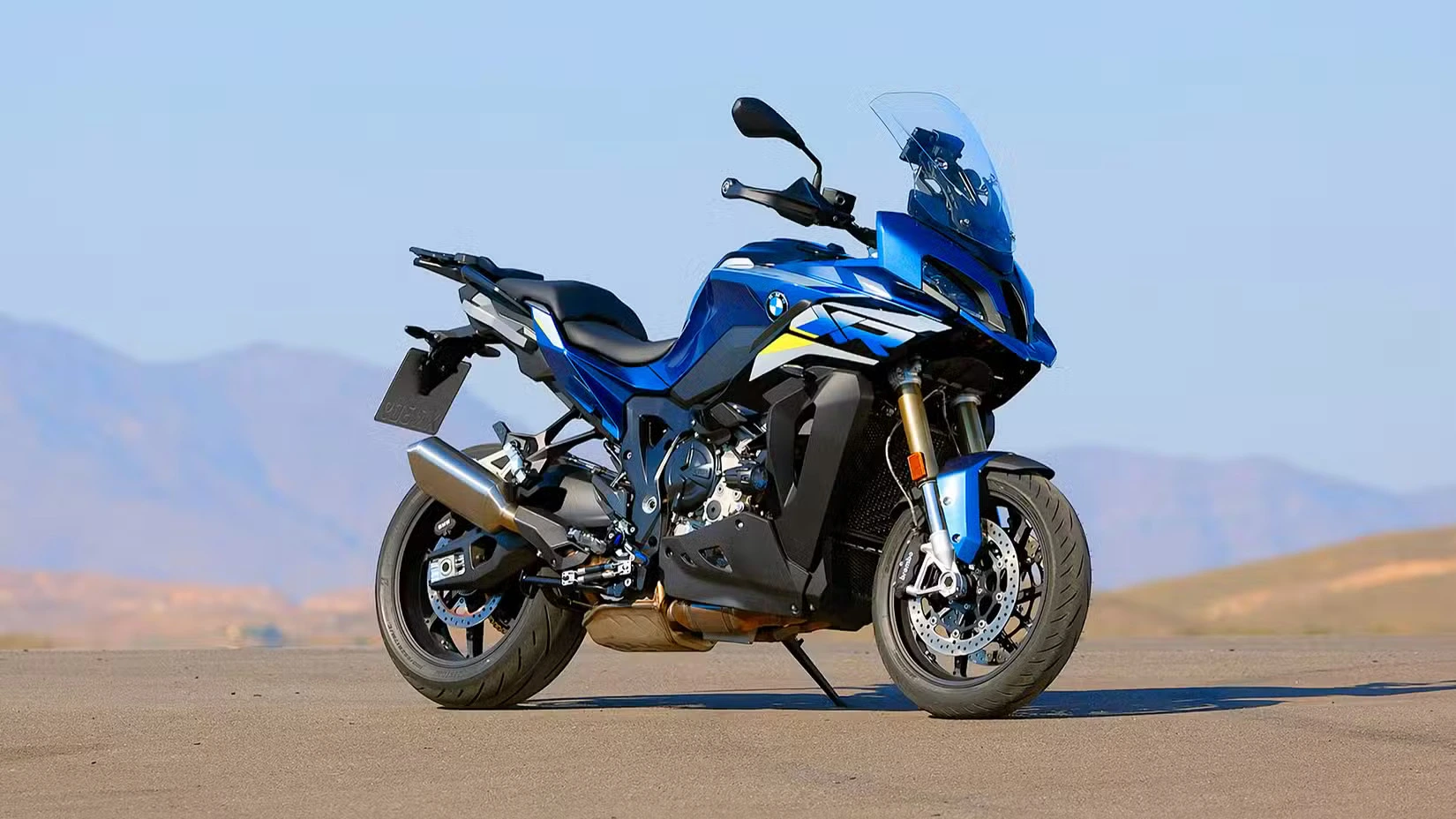
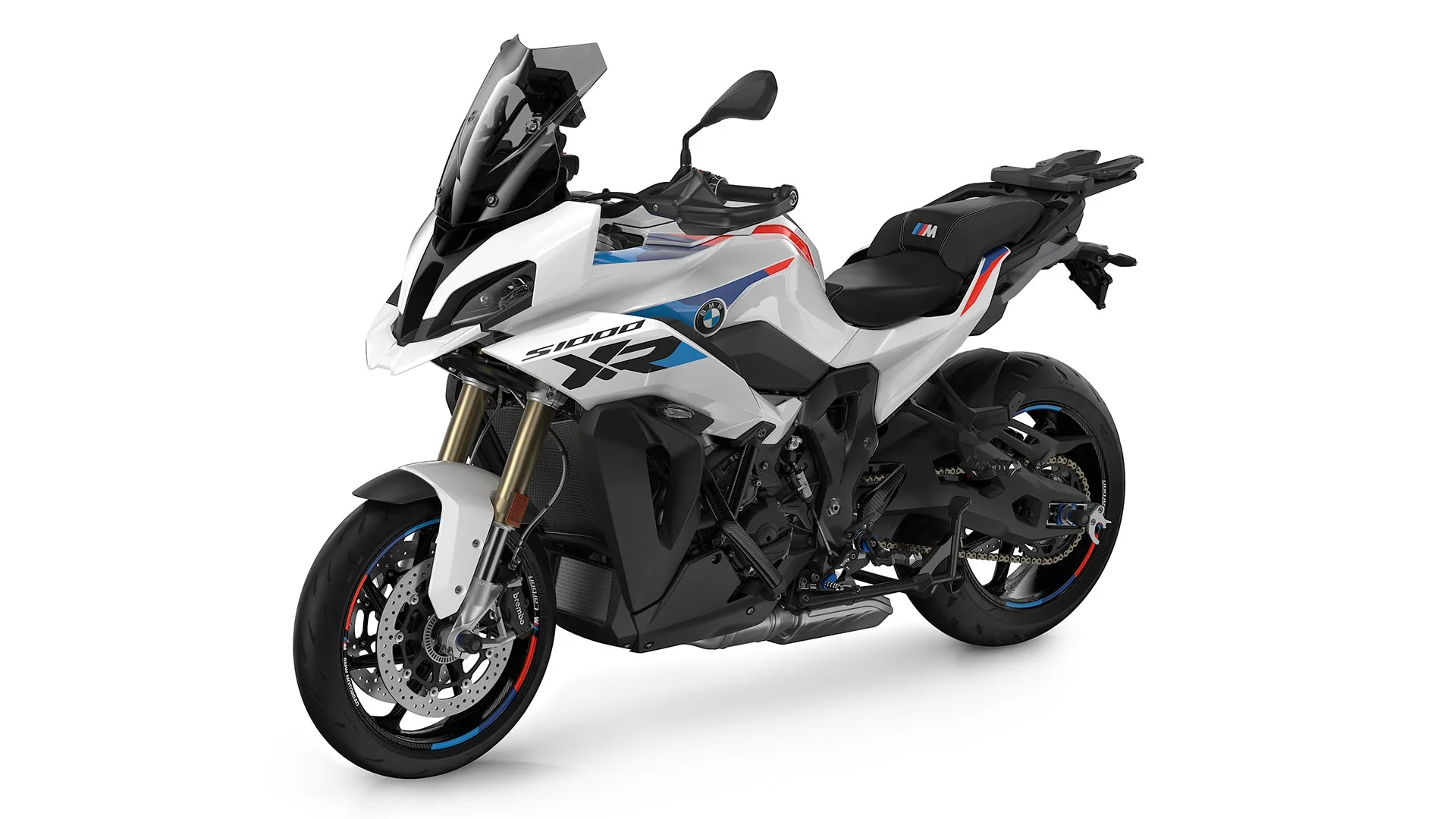
One look at the BMW S 1000 XR 2025 and it immediately becomes clear: this is not just another sports tourer, but a real ‘bird of prey’ that has gone hunting. It looks like a sports bike has been taken to the next level.
Front part
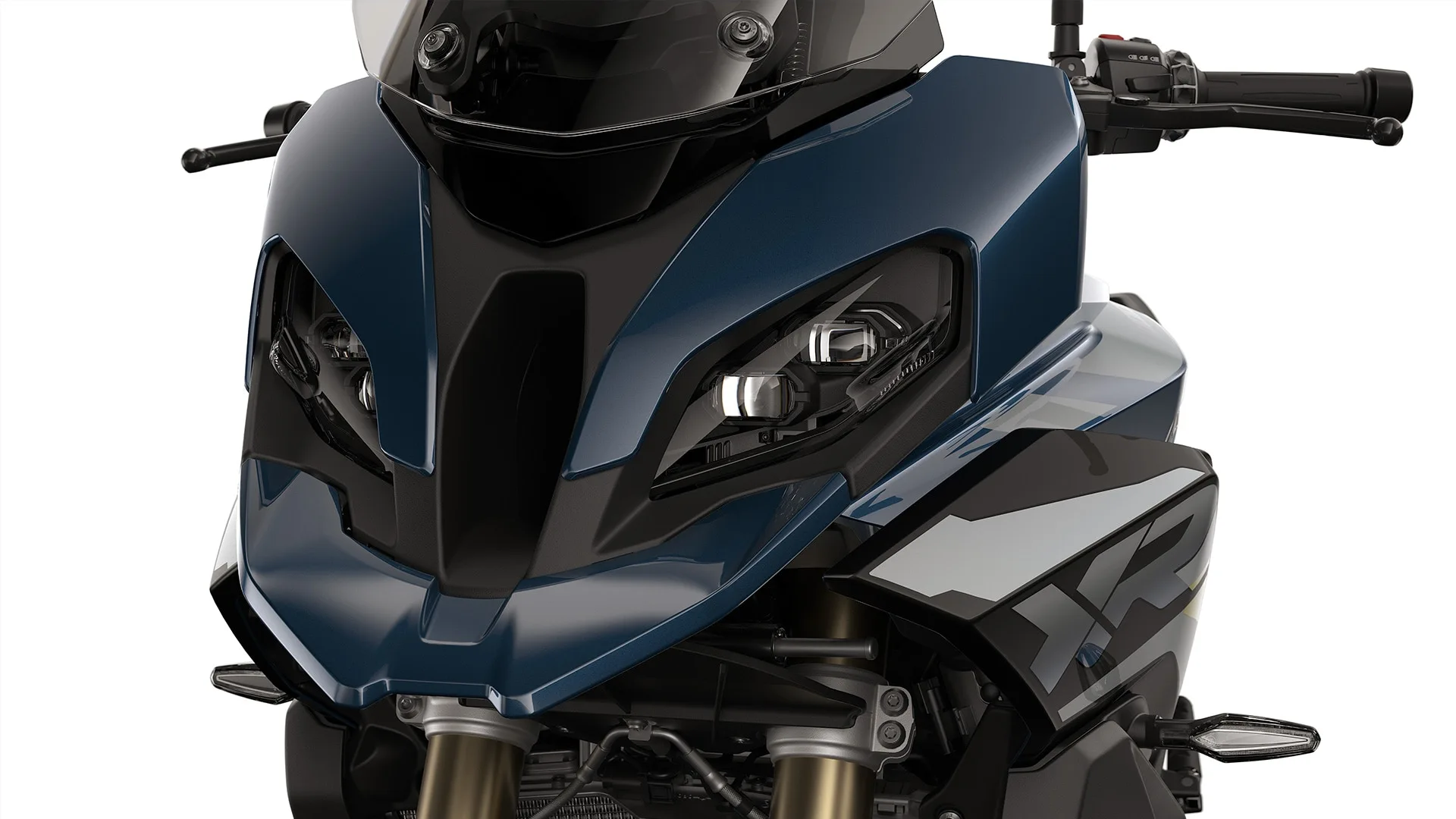
The front part is the ‘face’ that cannot be confused. The fairing with sharp lines and adjustable windscreen acts as armour against oncoming air. When you drive on the motorway, you feel the airflow being deflected to the sides, leaving you in a comfortable ‘capsule’.
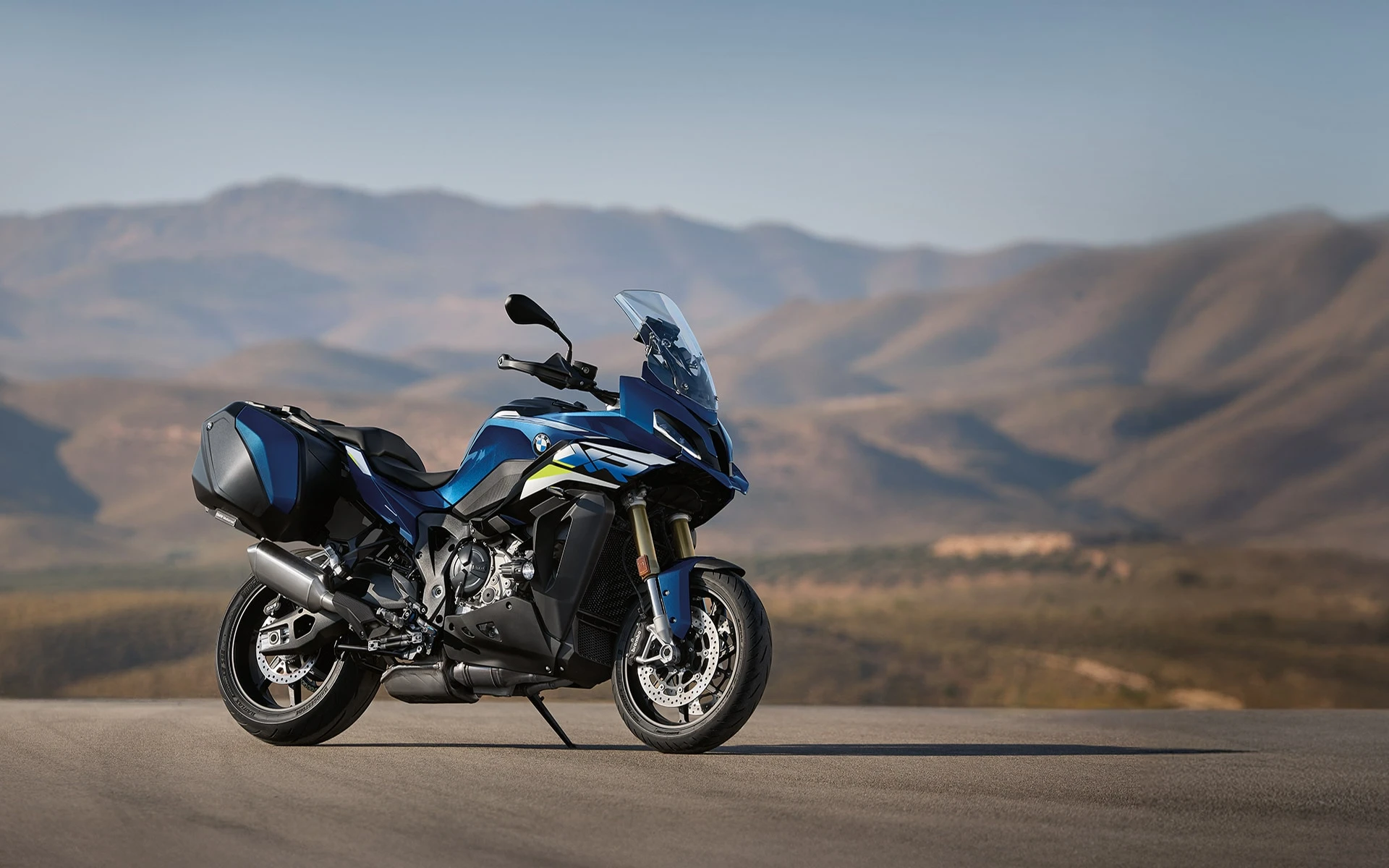
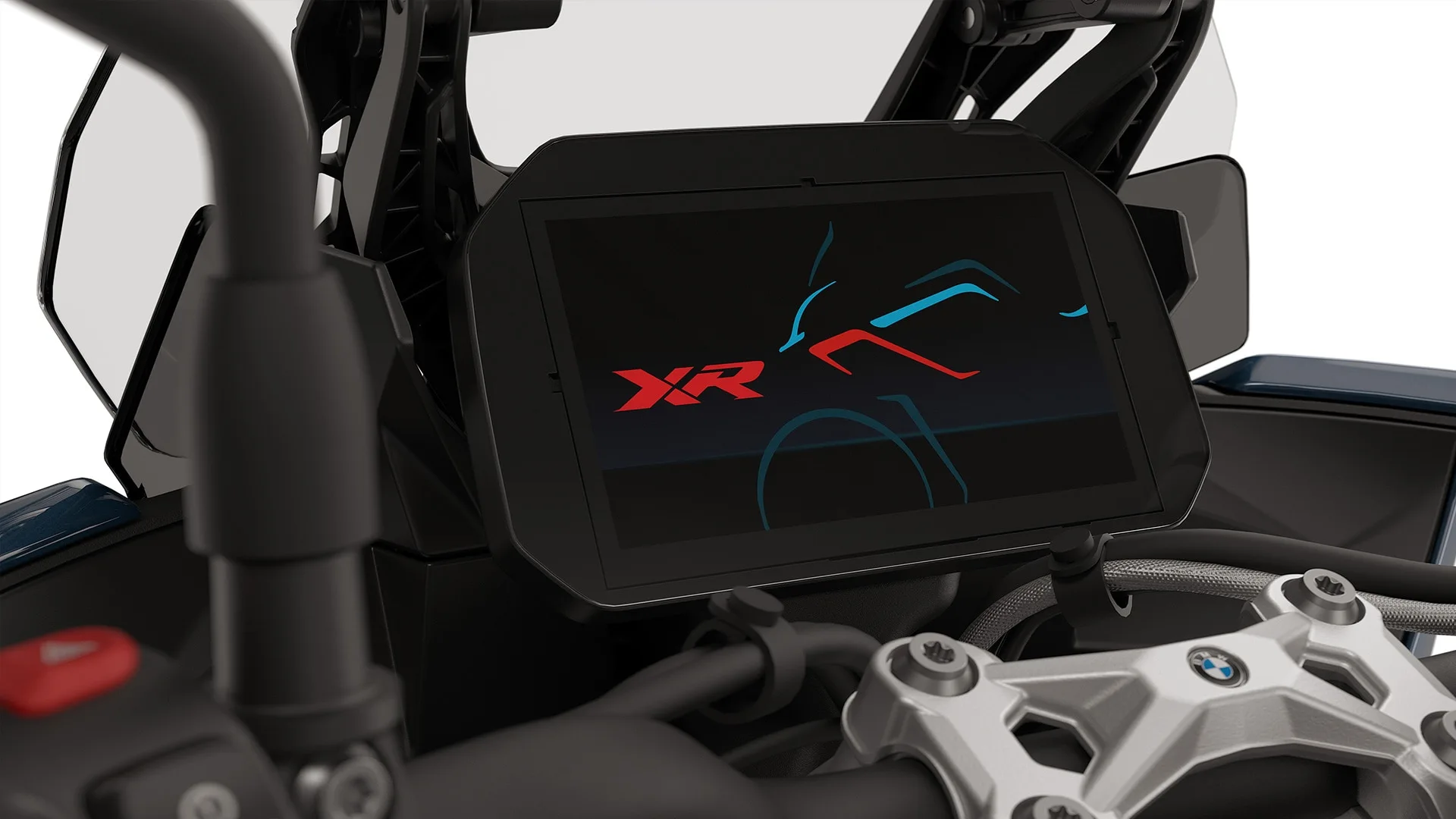
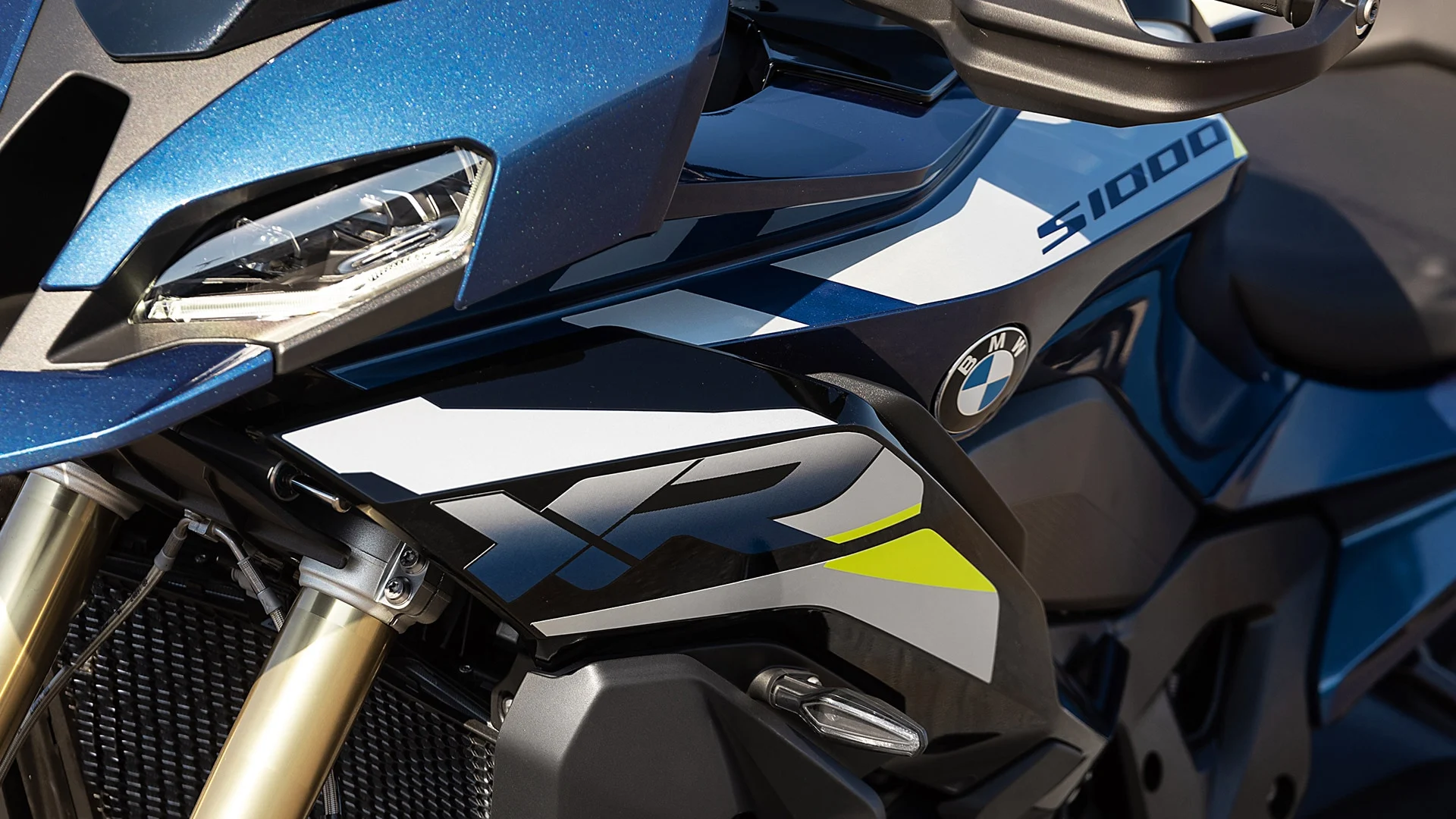
The LED optics look like the cold gaze of a hunter on the prowl. Not only do they add aggression, but they also really save you in the dark: the light beam is even, clear and does not scatter. And in the middle of the steering wheel, there is a 6.5-inch TFT display that resembles a tablet. Here you have navigation, driving modes, and all the telemetry. Everything is at your fingertips, nothing superfluous.
Side view
When you get behind the wheel, you can feel this bike: the ergonomics here are designed specifically for driver comfort. The 33.5-inch seat height is comfortable for those of average height, and if necessary, it can be lowered to 31.1 inches so that even women can ride comfortably.
The width of 33.5 inches offers two advantages at once: compactness in the city and stability on the road. The handlebars are wide, your hands rest naturally, and even in heavy traffic you feel in control, and there will be no problems on narrow streets either.
The fuel tank deserves a special mention. With a capacity of 5.2 gallons, it should be enough for over 300 km without refuelling. And yet the tank does not seem bulky: it fits organically into the silhouette of our sports tourer, so that your knees comfortably wrap around the motorcycle.
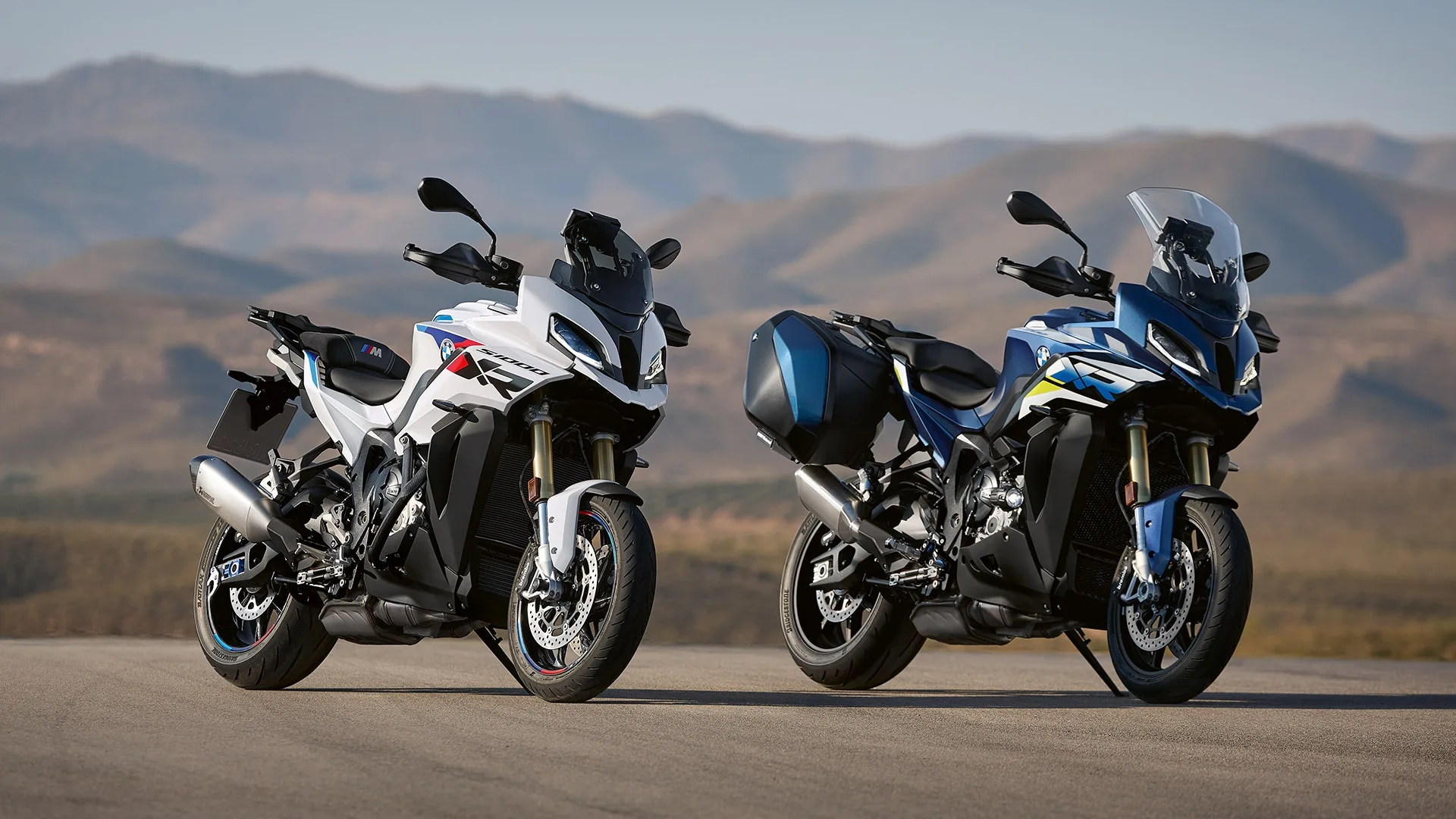
Now let's talk about style. BMW offers three colour options:
- Black Storm Metallic 2 — classic aggressive black for those who love minimalism.
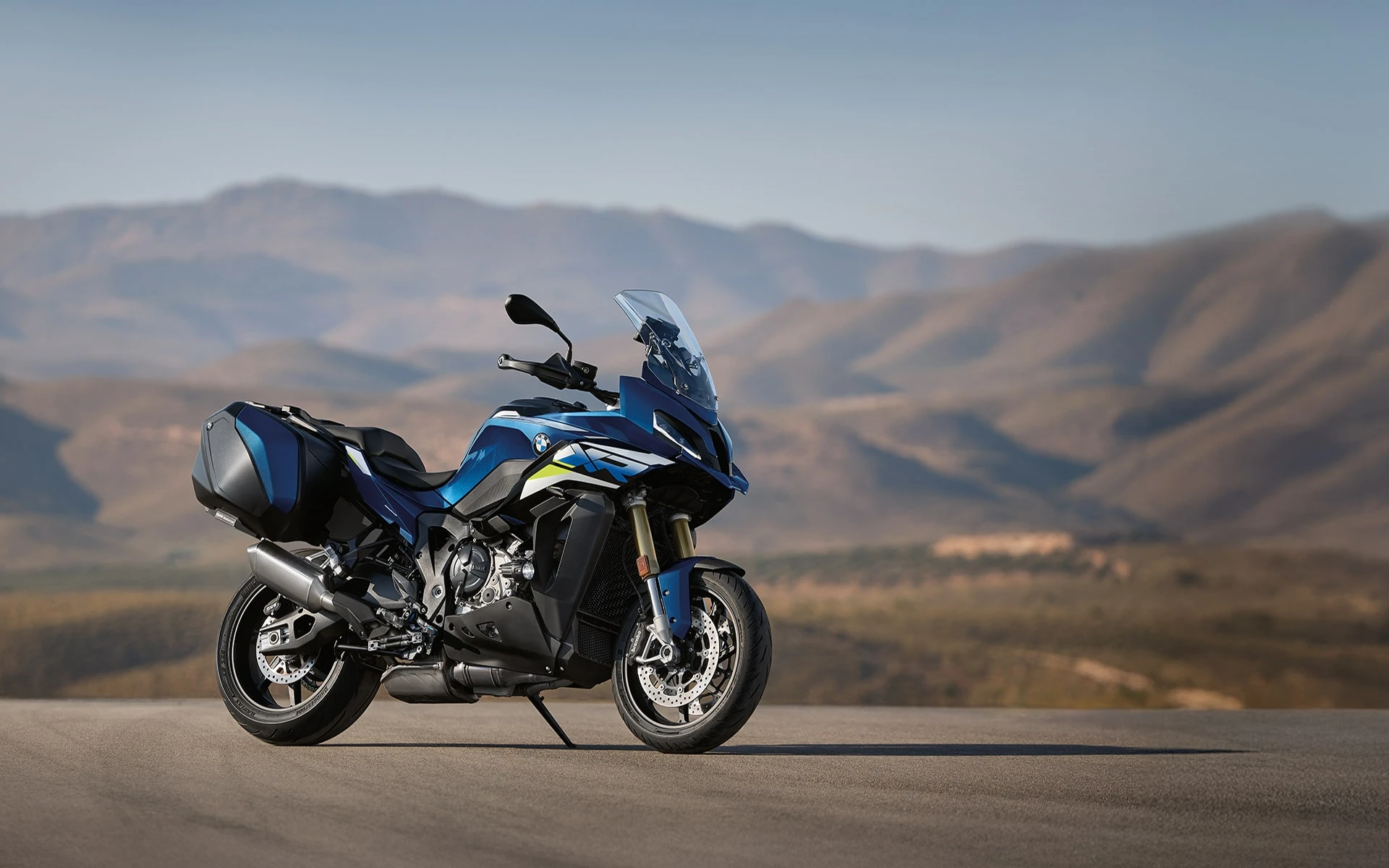
- Gravity Blue Metallic — deep blue in the Style Sport package, adding elegance and restrained power.
- Light White/M Motorsport — white with sporty accents, a direct reference to BMW's racing DNA.
Rear
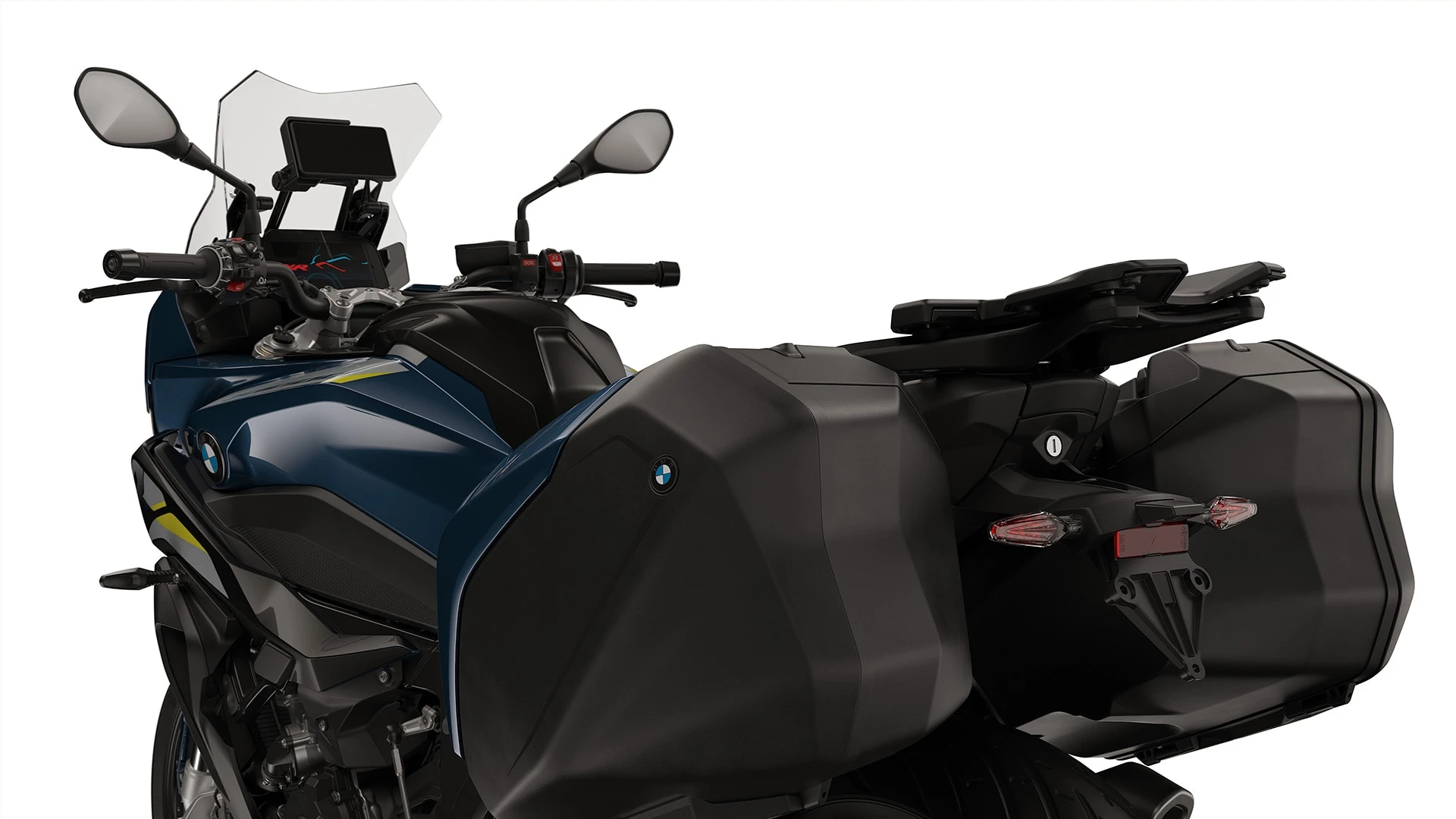
The rear is minimalist and practical. The luggage compartment is so cleverly integrated that even with panniers, the motorcycle does not look ‘wide’.
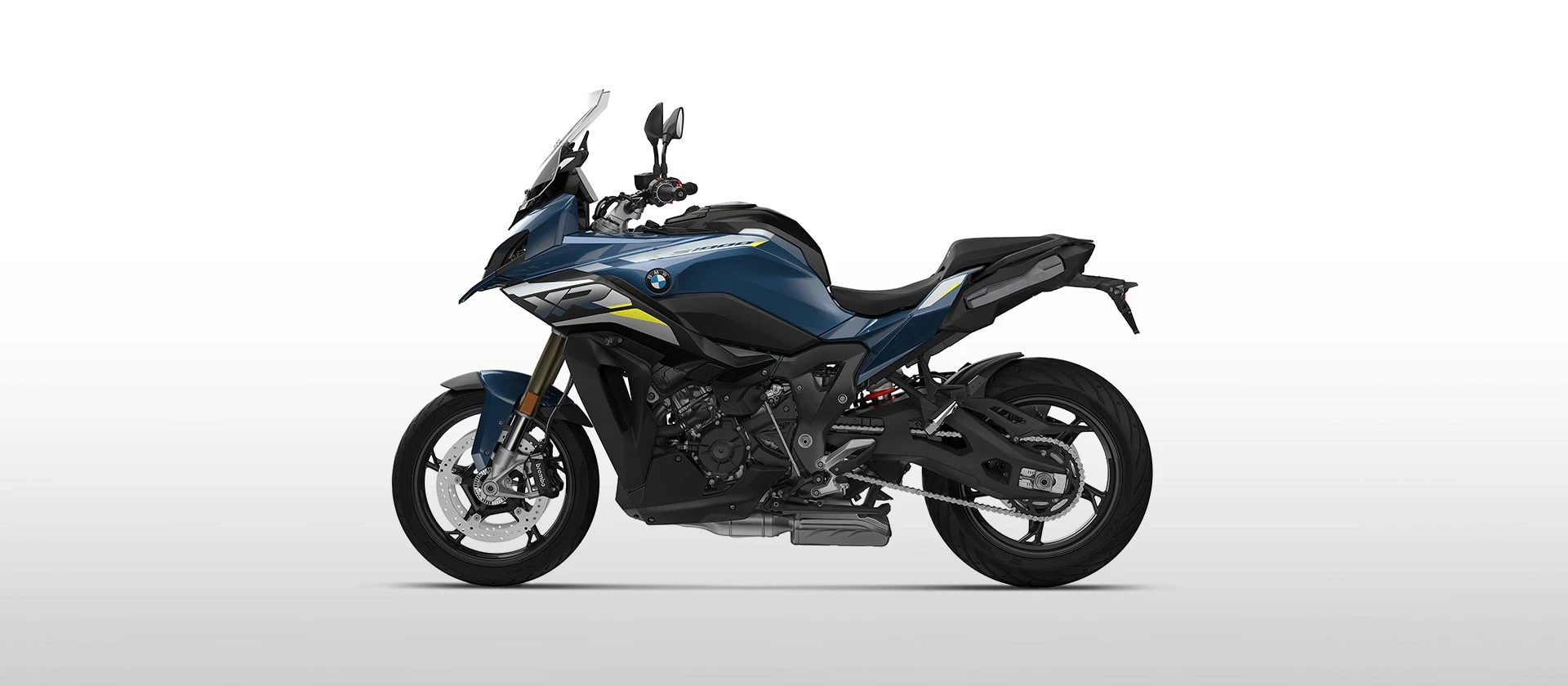
The 84.8-inch length elongates the silhouette, and the 492-pound payload allows you to take both a passenger and luggage with you — all without losing balance while riding. The total weight of 500 pounds is balanced and technically correctly distributed: therefore, the bike is obedient even at low speeds, but at the same time holds the track like a real sports bike, although it is not surprising since it has a sports base.
| Dimension | Value |
|---|---|
| Seat height at unladen weight | 33.5" (OE lowering: 31.1") |
| Inner leg curve at unladen weight | 75" (OE lowering: 71.2") |
| Usable tank volume | 5.2 gal |
| Reserve | approx. 1 gal |
| Length | 84.8" (over rear wheel) |
| Height | 57.5" (without mirror) |
| Width | 33.5" (without accessories) |
| Unladen weight, road ready, fully fueled | 500 lbs 1) |
| Permitted total weight | 992 lbs |
| Payload (with standard equipment) | 491.6 lbs |
CHASSIS and HANDLING
The BMW S 1000 XR is not just a sports tourer. It is an athlete in a backpacker's outfit: light, compact and always ready to conquer the peaks. You get behind the wheel and immediately feel that this is not a compromise between comfort and drive, but a harmonious combination of both worlds.
Chassis
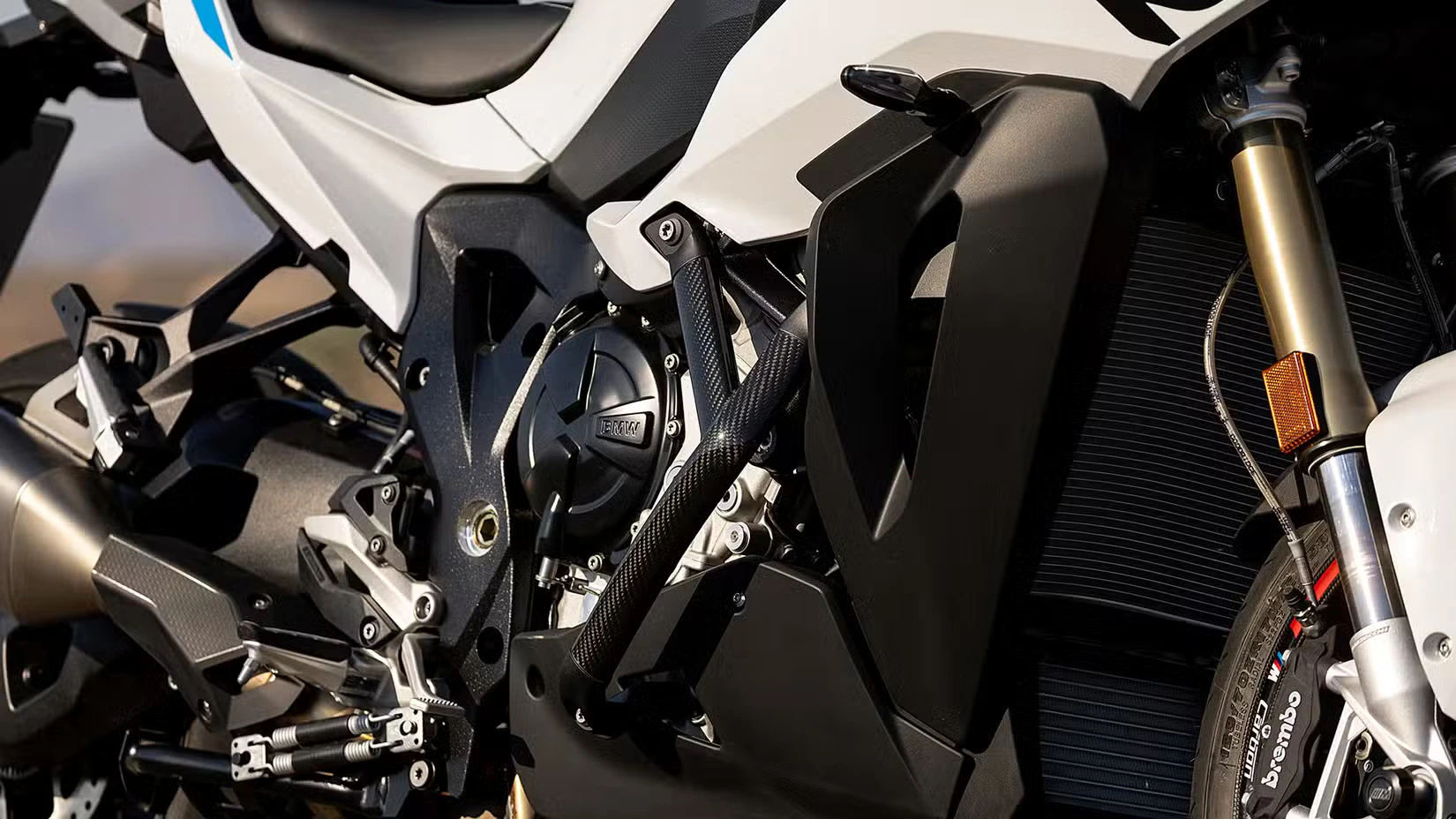
The frame is a cast aluminium bridge type, and the engine is part of the load-bearing structure. It feels like you're not controlling a bunch of parts, but a single monolith that obeys your slightest hand movement. The 60.6-inch wheelbase and 64.8° steering angle make it easy to handle: on the motorway, the XR stays firmly on track, and in the city, it doesn't turn into a cumbersome monster — you can manoeuvre it easily, just like a naked bike.
Dynamic ESA suspension
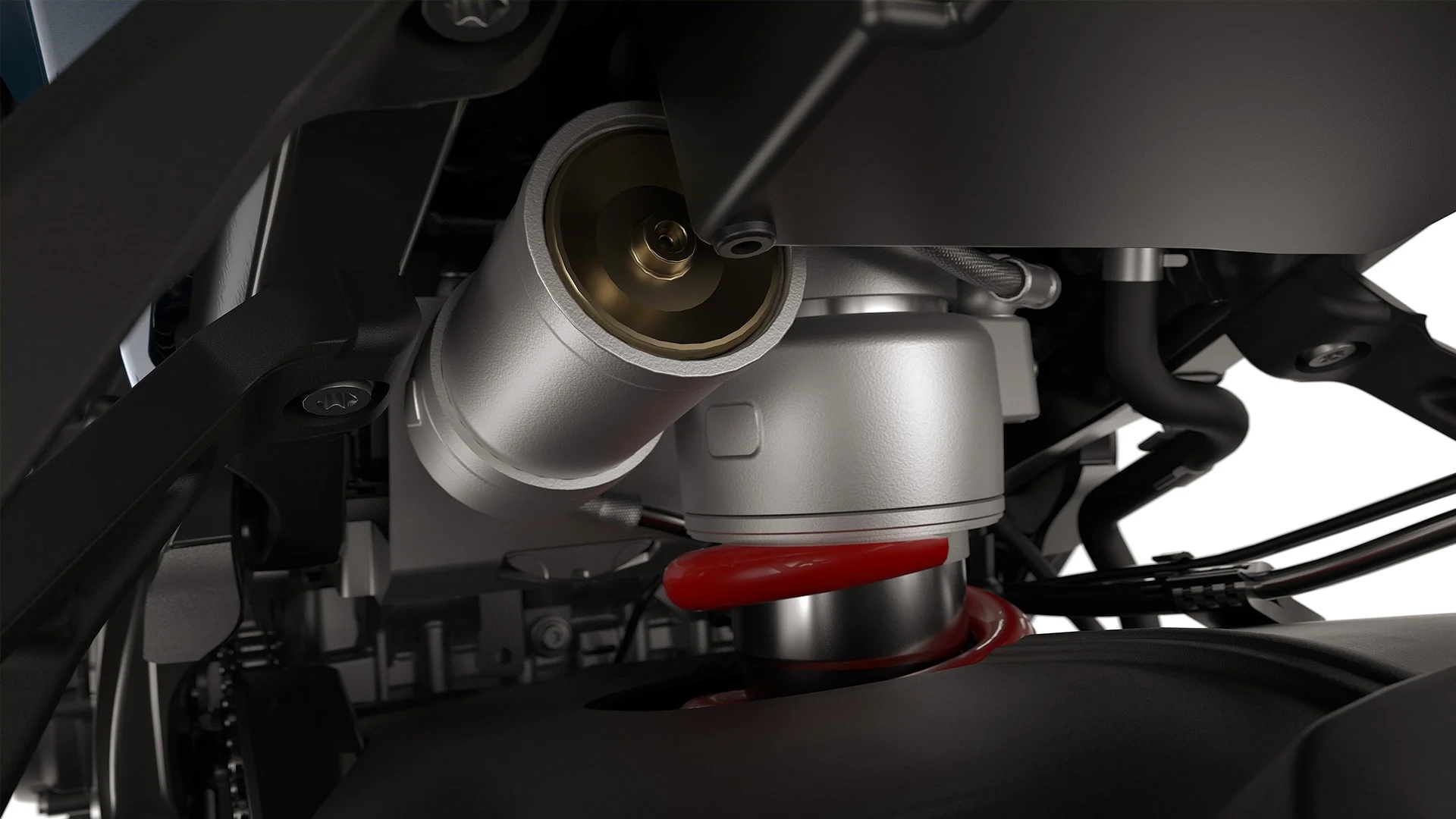
This is where the magic begins. Dynamic ESA doesn't just absorb shocks — it reads your riding style. When you press the throttle, the suspension becomes stiffer; when you release the throttle, it becomes softer. Of course, it also reads bumps and uneven surfaces. Hit a rough patch of road and you'll feel the bike glide smoothly over the bumps because the system is really cool. The 5.9-inch front and rear suspension travel allows you to ride smoothly even on gravel without fear of losing your balance.
Handling and brakes
When you enter a turn, the XR leans smoothly, without excessive sharpness. Light alloy wheels paired with wide 120/70 tyres at the front and 190/55 at the rear create the feeling that the wheels are glued to the asphalt.
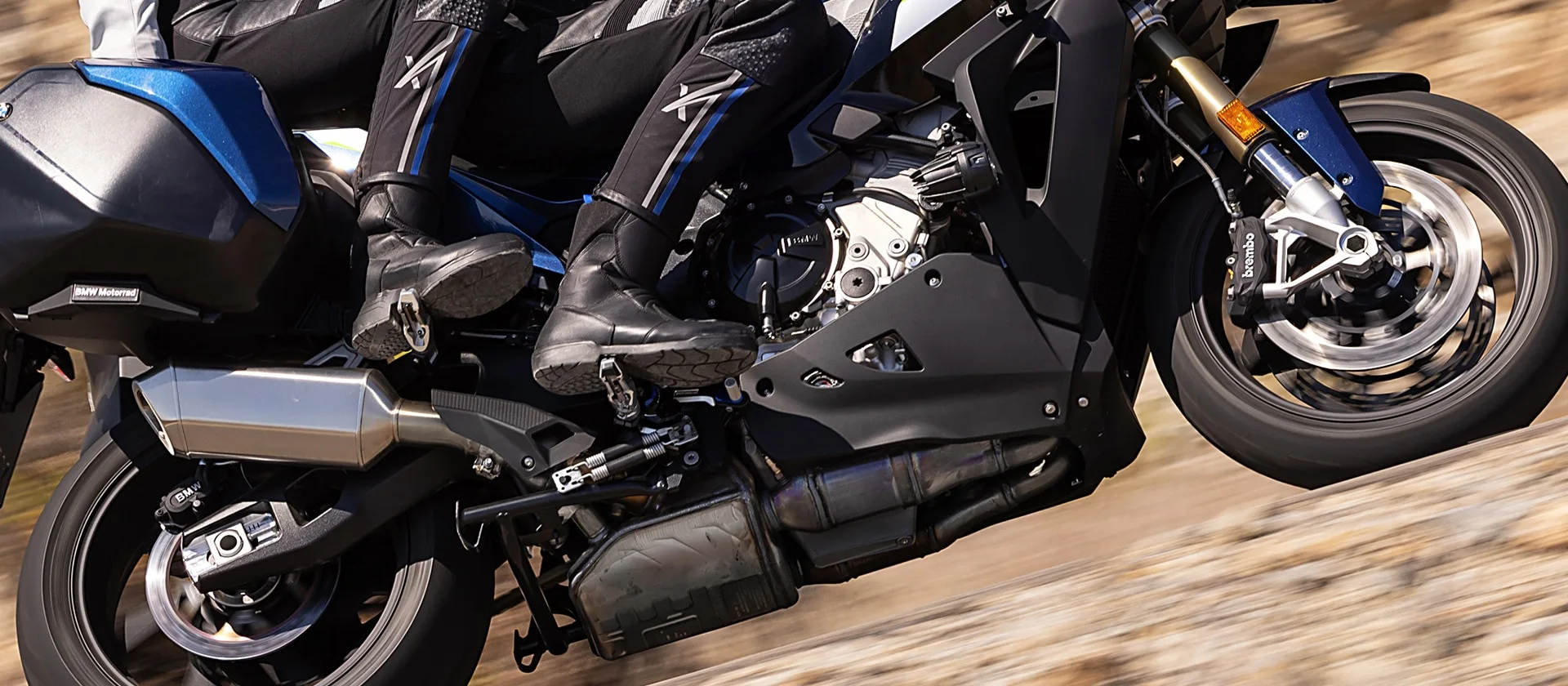
And when you need to stop, the artillery comes into play: two 320 mm front discs with 4-piston calipers and 265 mm at the rear. Press the lever and you feel the beast tear away, but the electronics keep it under control. The ABS Pro system provides automatic control for the rider, so you won't panic even on corners: brake confidently, knowing that the electronics will always back you up with German quality.
| Shassis | Value |
|---|---|
| Frame | Bridge-type frame, cast aluminum, load-bearing engine |
| Caster | 4.64" |
| Front wheel location / suspension | Upside-down telescopic fork, diameter 45 mm, electronic self-adjusting rebound/compression damping (Dynamic ESA) |
| Rear wheel location / suspension | Aluminum double-sided swing arm, central shock absorber, electronic preload adjuster, electronic self-adjusting rebound/compression damping (Dynamic ESA) |
| Suspension travel, front / rear | 5.9" / 5.9" |
| Wheelbase | 60.6" |
| Steering head angle | 64.8° |
| Wheels | Aluminum cast wheels |
| Rim, front | 3.50 x 17" |
| Rim, rear | 6.00 x 17" |
| Tire, front | 120/70 ZR17 |
| Tire, rear | 190/55 ZR17 |
| Brake, front | Twin disc brake, diameter 320 mm, 4-piston fixed caliper |
| Brake, rear | Single disc brake, diameter 265 mm, 2-piston floating caliper |
| ABS | BMW Motorrad Integral ABS (partial integral) |
ELECTRONICS & SAFETY SYSTEMS
The BMW S 1000 XR is not just a bike, but a real computer on wheels, and now we will figure out why. It not only drives, but also thinks for you: it illuminates turns, controls traction, and can even call for help. This is a case where electronics become not an intrusive ‘controller’ but a partner on every trip, and now we'll figure it all out.
Active safety systems Imagine driving at night: you enter a bend, and the headlight already turns the beam of light there before you do. This is Headlight Pro — matrix LED optics with 12 segments that are controlled independently. Thanks to the six-axis IMU, the system adjusts the light beam in real time, illuminating the road even in sharp turns.
I've already mentioned it, but I'll say it again. Two 320 mm brake discs at the front and 265 mm at the rear work in tandem with ABS Pro. The secret of this system lies in its partially integrated algorithm. And all this at a frequency of 100 Hz, so even on wet roads, the wheels remain under control.
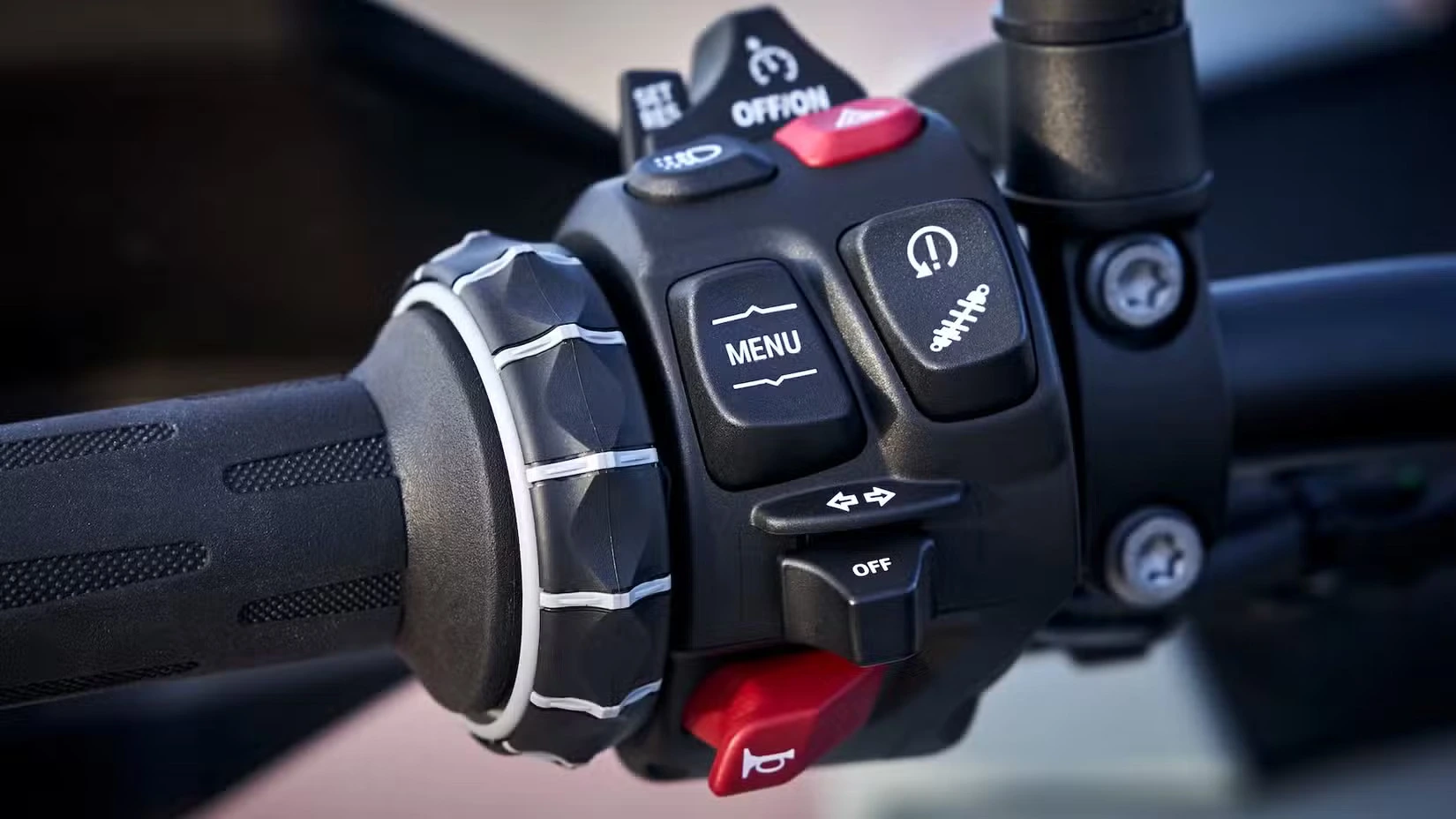
Found yourself in an unpleasant situation? The E-Call module tracks the movements of the motorcycle, and if an accident occurs, it sends your coordinates to the BMW centre via GSM. Or you can press the button on the handlebars yourself. In other words, the bike not only takes care of handling, but also your safety directly.
Dynamic control systems
Stuck on a steep incline? No problem! HSC Pro (Hill Start Control Pro) automatically locks the rear wheel at an angle of more than 5° to prevent rolling backwards. This system also helps you start off easily, even with a passenger and luggage.
You ease off the throttle and the rear wheel starts to slip? MSR kicks in and keeps the torque under control. It's like insurance: sudden engine braking won't knock you off course, even on slippery asphalt.
Dynamic Traction Control is a system that holds the rear wheel for you. The system reads data from the IMU 200 times per second and adjusts traction. In ‘Rain’ mode, the bike is as delicate as possible, and in ‘Dynamic Pro’ mode, it even allows a little slip before the ABS intervenes.
You could call it pure magic, but it's actually technology from BMW engineers: suspension with electronic damping. It monitors road conditions and riding style, adjusting stiffness up to 200 times per second. Soft on potholes, steel in corners. You can literally feel the bike adjusting to you.
Ergonomics and comfort
Keyless access operates at a frequency of 125 kHz. Just have the keys in your pocket and the system will unlock the ignition. This is convenient in urban conditions when you often stop and start.
There is a small compartment for tickets and a niche under the seat for documents or gloves. For tourism, there are integrated brackets for boxes that look organic.
Your smartphone will never run out of power — the USB port near the TFT panel is always at hand. The techies even took care of the case holder — a small detail, but it adds to the feeling that the bike was designed specifically for your trip.
The BMW S 1000 XR is a symbiosis of hardware and algorithms. Headlight Pro illuminates the upcoming turn, DTC controls every wheel rotation, and Dynamic ESA makes the road almost smooth. You just ride and enjoy yourself, while all the electronics work invisibly for your safety and comfort.
Chinese motorcycles versus Japanese motorcycles: which to choose?
ENGINE SPECIFICATIONS & TRANSMISSION SYSTEM
The BMW S 1000 XR has a power unit that combines the sporting DNA of a superbike with ergonomic adaptation for touring. It is not just a 999cc in-line engine, but an integrated system where every parameter works to achieve a balance between power and efficiency.
Design features
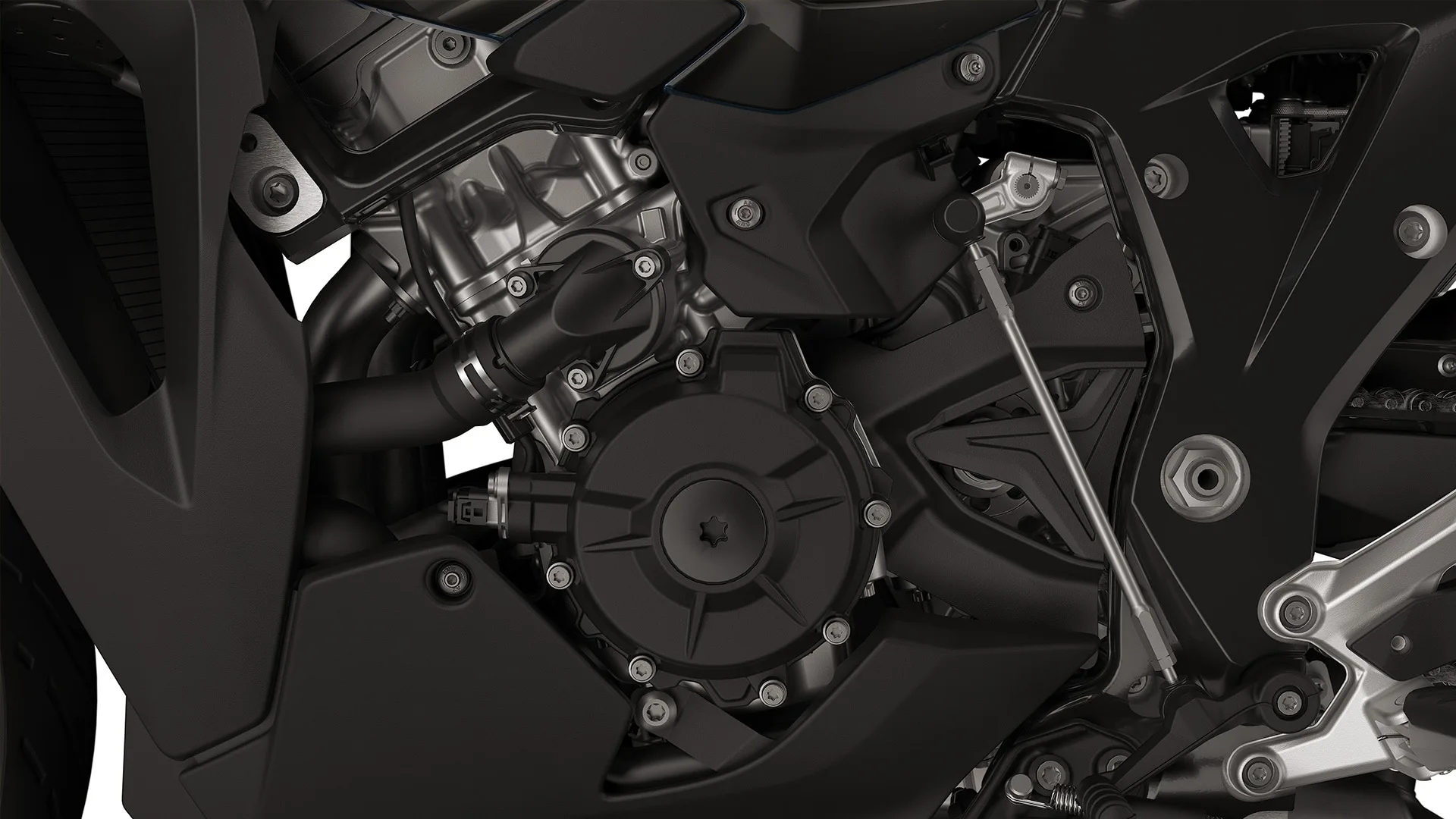
The heart of the XR is a 999 cm³ inline four-cylinder engine with 80×49.7 mm geometry. This ratio of short-stroke piston to cylinder diameter creates a high-revving character: the engine unleashes its potential at the top end, but thanks to precise calibration, it remains powerful in the mid-range.
The compression ratio of 12.5:1 requires the use of Premium unleaded 98 RON petrol, which allows for high efficiency and stable operation even under maximum load. This indicator is a compromise between sports performance and resource, as it provides both instant response and temperature control.
BMS-O system with electronic throttle valve: it regulates the air and fuel supply with an accuracy of hundredths of a second. Algorithms adjust the injector's operation in real time, which increases stability at low revs and allows for smooth traction control in traffic jams or on slippery surfaces.
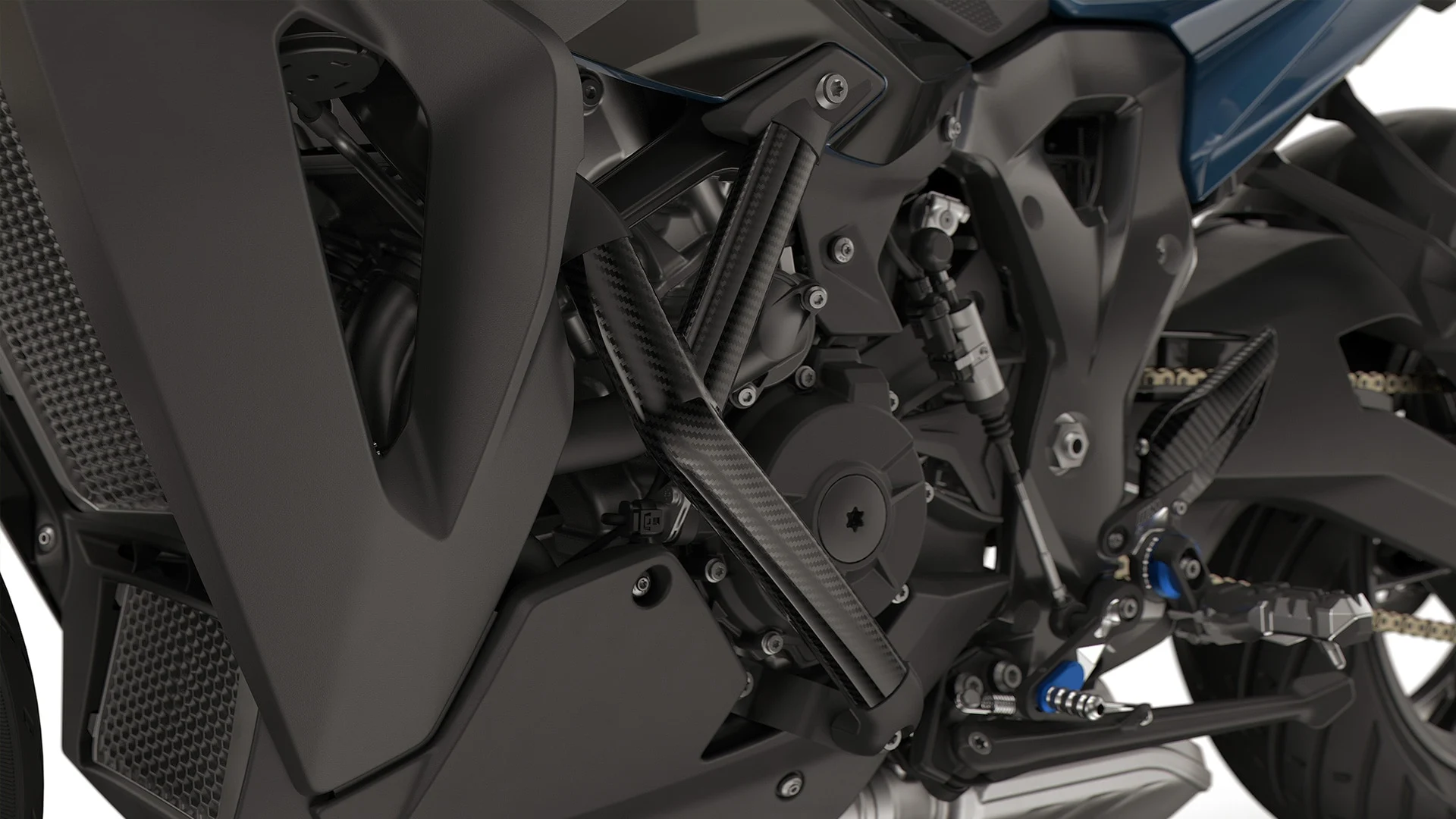
Combined cooling (oil + liquid) ensures uniform thermal conditions. This is critical for any engine, especially one capable of revving up to 12,000 rpm, as even short-term temperature spikes can affect component wear.
Dynamic characteristics
This engine delivers 170 hp at 11,000 rpm and 84 lb-ft at 9,250 rpm. It is not only the peak value that is important, but also the shape of the torque curve: thanks to the configuration and electronic control, the thrust increases evenly from the mid-range, allowing you to feel equally confident in city traffic and when accelerating on the motorway.
In the upper rev range, the engine demonstrates its sporty character, gaining power without any sudden ‘drops’. This is a typical approach for BMW Motorrad: combining ease of control with aggressive response where needed, which is where technology comes in.
The use of a high compression ratio in combination with an electronic injection system optimises fuel combustion. In practical terms, this means less heat loss and more efficient use of every drop of petrol during dynamic driving.
Transmission
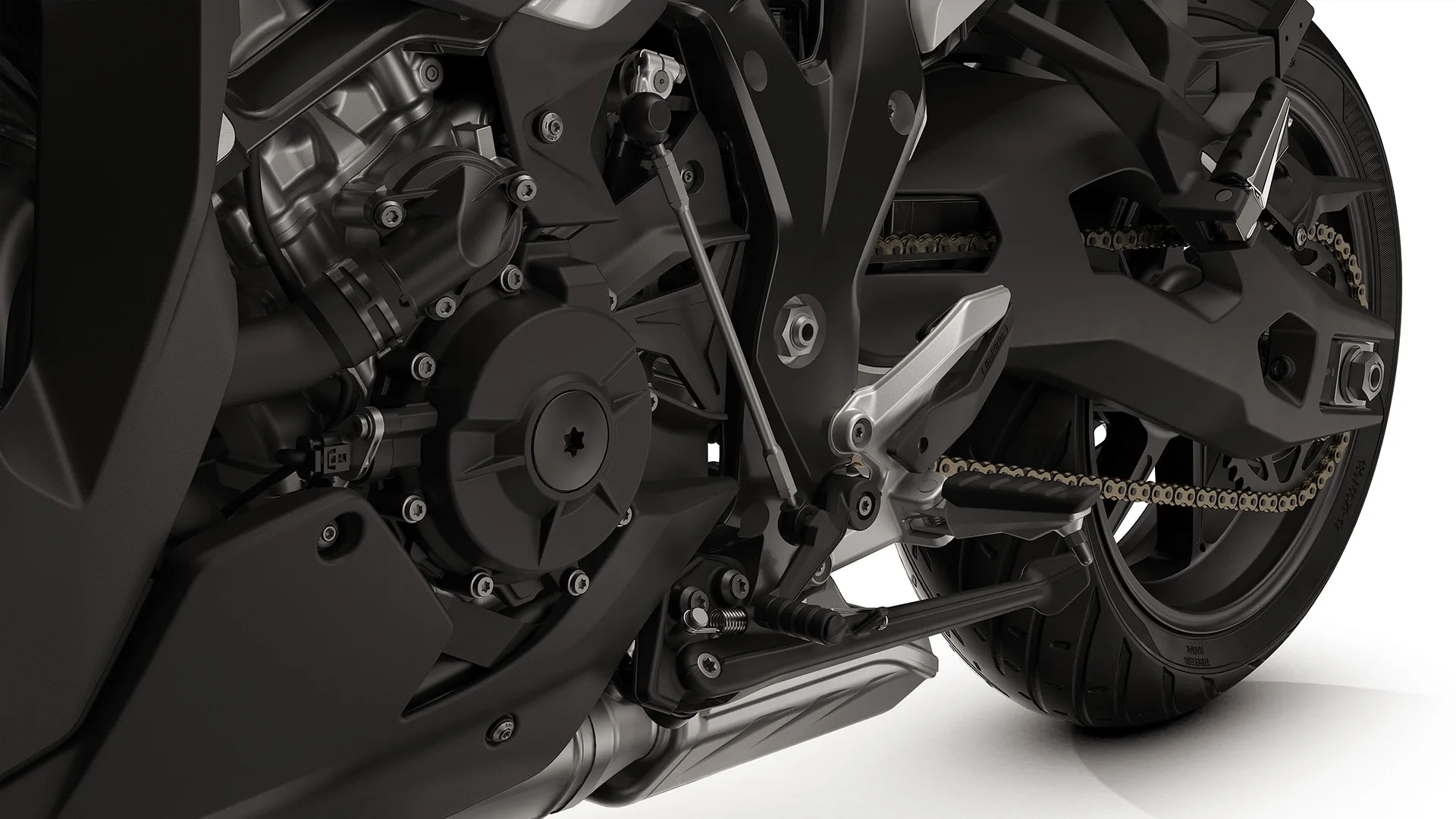
The 6-speed gearbox with constant mesh ensures precise shifting and minimal power loss. The gear ratios are selected so that the lower gears provide confident and rapid acceleration in the city, while the higher gears provide stability and economy on the motorway.
The multi-disc clutch in an oil bath performs two functions at once: it reduces heat and improves the smoothness of gear changes. This is important for the XR, which can be operated both in the city and at high speeds for hours on end, not to mention in rural areas.
The use of 98 RON fuel is not only a requirement but also a technical advantage: it allows the full potential of high compression to be realised, maintaining combustion stability even under load in ‘Dynamic’ or ‘Dynamic Pro’ modes.
| Engine Feature | Specification |
|---|---|
| Rated output | 170 hp at 11,000 rpm |
| Type | Oil/water-cooled, four-cylinder, four-stroke, in-line engine with four valves per cylinder |
| Bore x Stroke | 80 mm x 49.7 mm |
| Compression Ratio | 12.5 : 1 |
| Capacity | 999 cc |
| Maximum Torque | 84 lb-ft at 9,250 rpm |
| Mixture control | Electronic intake pipe injection / digital engine management system: BMS-O with throttle-by-wire |
| Max. RPM | 12,000 rpm |
| Maximum speed | over 155 mph |
| Fuel type | Premium unleaded (max. 5 % ethanol, E5), 98 ROZ/RON, 93 AKI |
| Clutch | Multiplate clutch in oil bath, slipper clutch, self-reinforcing |
| Gearbox | Constant-mesh 6-speed gearbox integrated in the transmission housing |
| Drive | Chain 525 17/45 |
RIDING IMPRESSIONS
There are moments when you get on a motorbike and immediately realise: this is going to be a journey unlike any other. The BMW S 1000 XR 2025 is just like that. It stands before you like a wild beast — aggressive lines, fierce headlights. I press the starter, and the engine roars to life with a deep, rich growl, as if to say, ‘Well, shall we go hunting?’
The XR handles surprisingly easily in the city: it glides between cars and narrow streets, responding to the slightest movement of the throttle, and I feel as if I am controlling an extension of my own body. But the real magic begins outside the city. Imagine the asphalt dissolving into the horizon, surrounded by fields, forest roadsides, the smell of fresh earth and grass. I twist the throttle, and the four cylinders explode with energy. The acceleration is so smooth and yet so powerful that the world around me blurs into a single line, which is not surprising with an engine like this.
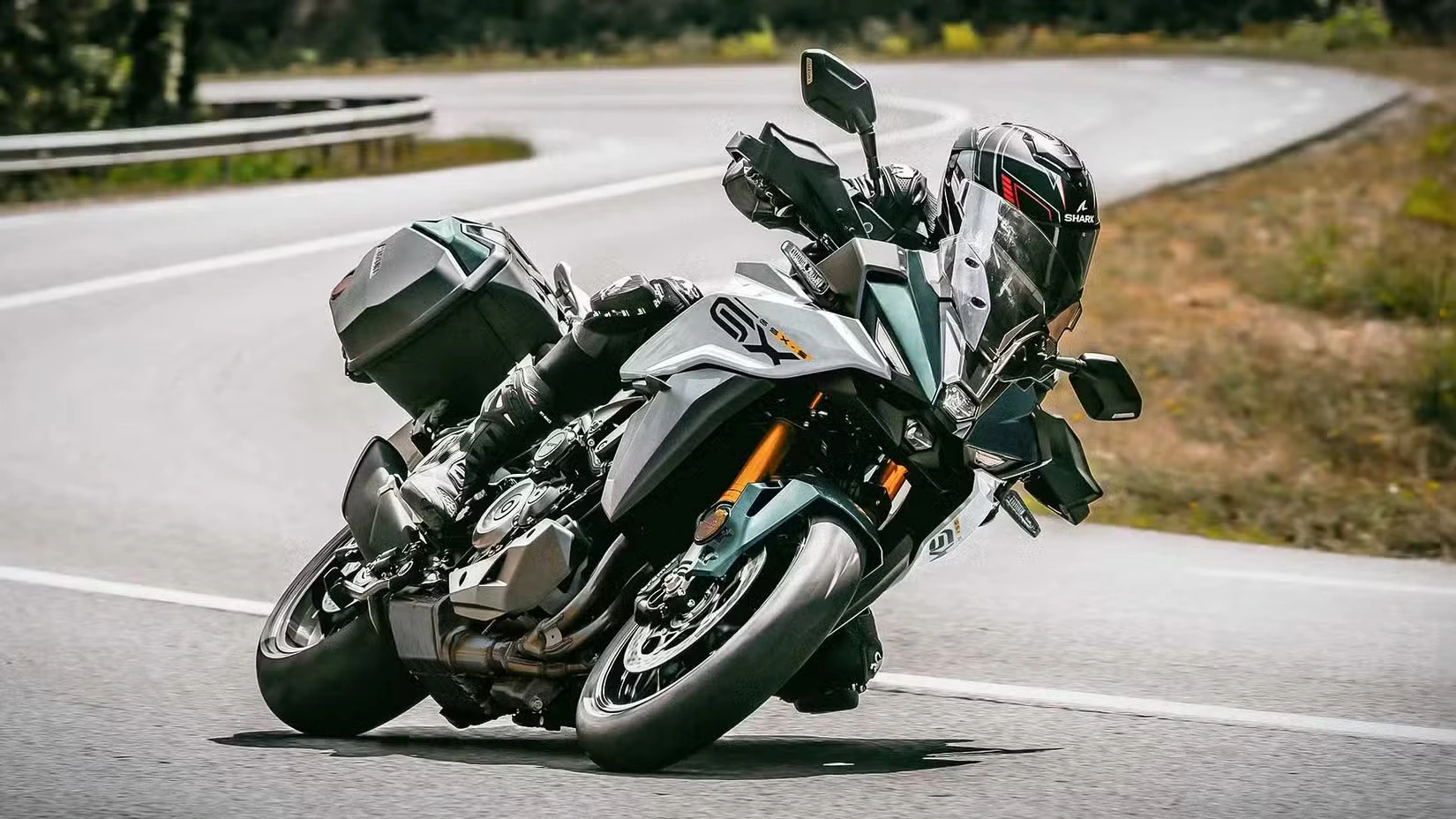
The country road with its bends is the best testing ground for the XR. The suspension swallows every bump as if it weren't there, and I just enjoy the thrill of this iron horse. I lean into the turn, and the bike draws an arc with jeweller's precision. The electronics kick in immediately: IMU, traction control, systems I don't even think about, but they work.
On the motorway, it's a different story. I set the cruise control, and the bike flies along smoothly, maintaining a speed of 150–160 km/h, as if it were nothing. The wind doesn't blow me off the saddle — the wind protection works perfectly, the seating position is comfortable, and my body is relaxed. And I catch myself thinking: yes, this is not just a motorcycle. It is my companion, my compass, my ticket to freedom.
The 5-inch TFT display flashes bright graphics, showing me everything I need: speed, route, even music.
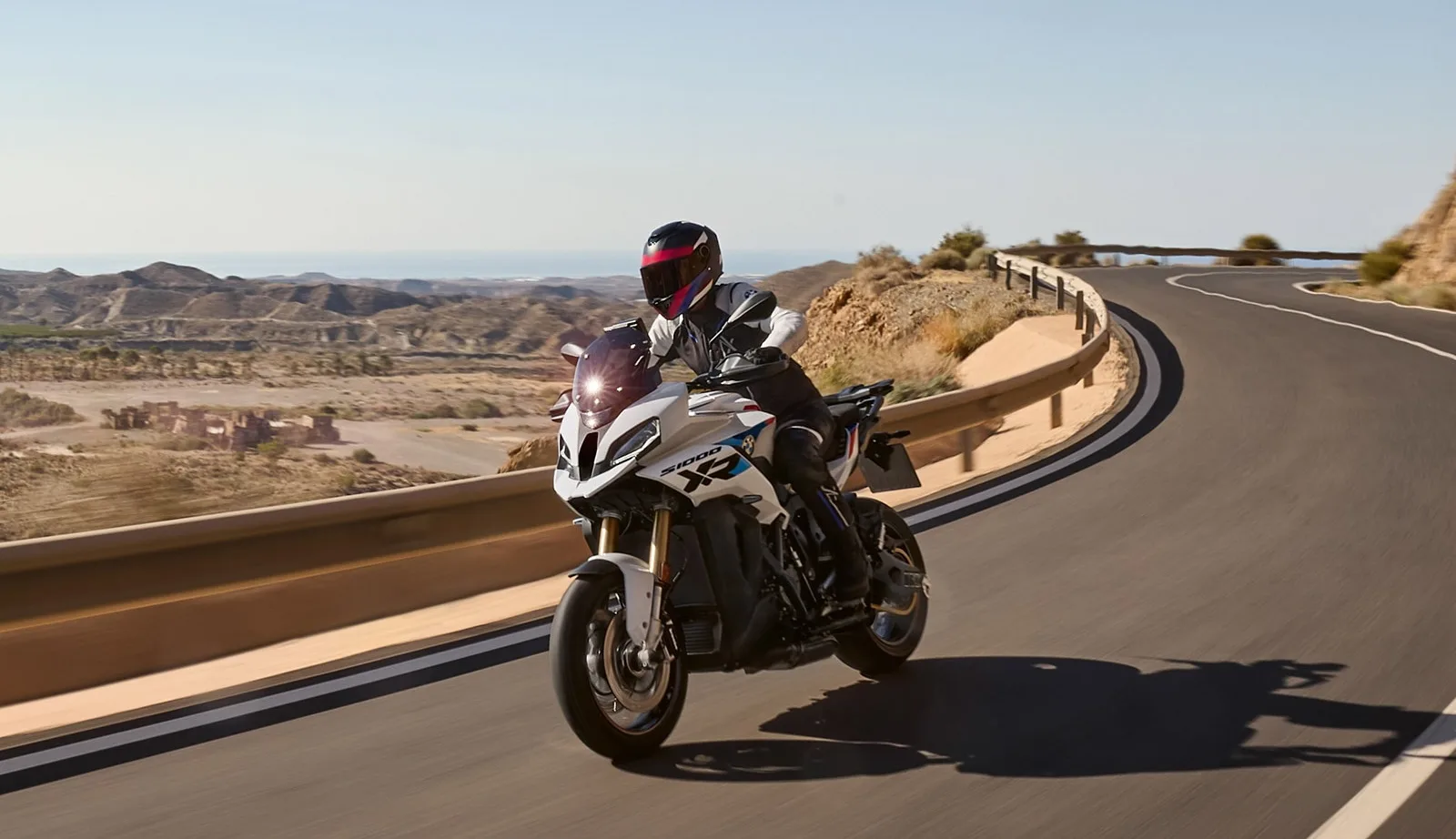
The BMW S 1000 XR gives you the feeling that you're not just moving forward, but that it's your exoskeleton, which you're connected to via a neural interface. In the city, it is manoeuvrable; on the motorway, it is fast; in the countryside, it opens up new horizons. And every time I stop, I want only one thing: to press the starter again and continue this momentum.
New vs. Used Motorcycles: Pros and Cons for First-Time Buyers
FUEL CONSUMPTION
City
The XR feels right at home in the city, but fuel consumption is always a bit of a pain here. I tested it in morning traffic jams: constant starts, sudden braking, average speed — 25–30 km/h. The bike stands at a traffic light, the fan turns on, and then it's off again. The on-board computer showed 6.2–6.5 l/100 km, and if you start to twist the throttle more sharply and keep the engine closer to 7,000 rpm, the figure rises to 6.8 l. I rode in Road mode, with a trunk full of small items, but without a passenger.
The road
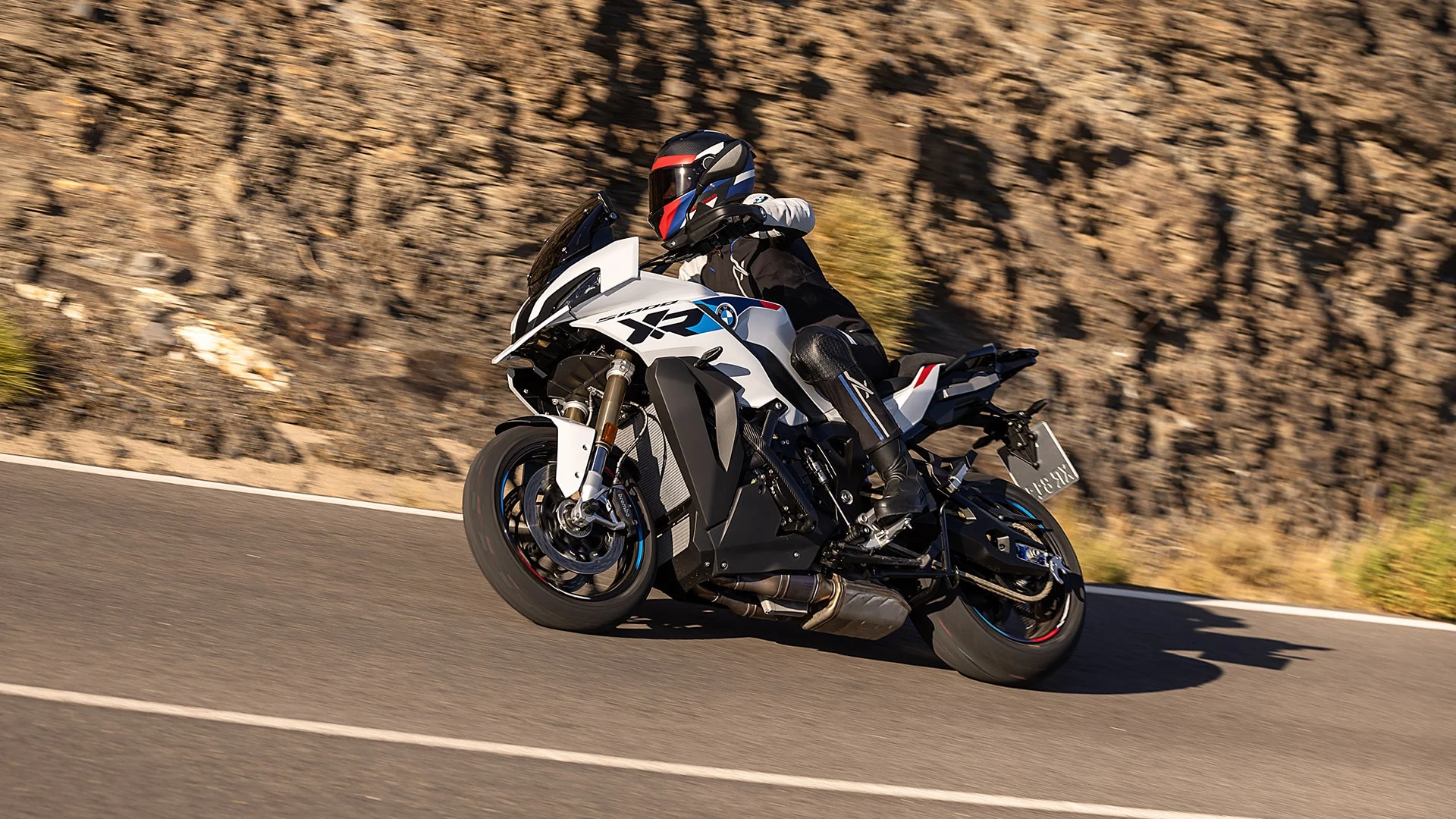
Here, the XR reveals itself in a completely different way. At a speed of 100–110 km/h, I turn on cruise control, keep Dynamic mode on, and the bike glides along the asphalt without any effort. Fuel consumption is 5.0–5.2 l/100 km, which, with a 20-litre tank, gives a solid range. But as soon as you twist the throttle a little and reach 140–150 km/h, fuel consumption jumps to 5.8–6.0 litres. I was riding with side cases, without a passenger, and even then aerodynamics had an impact on fuel consumption.
Mixed cycle
For the sake of ‘experimental purity,’ I drove a 200 km circle: half in the city, half on the highway. I drove calmly, mostly in Road mode. The on-board electronics showed 5.6–5.8 l/100 km. If you spend more time in traffic jams, consumption increases to 6.0, and if you spend more time on the motorway, it drops to 5.4. This is exactly the case when you realise how much your driving style and surrounding circumstances matter.
Rural areas
Driving through villages and on dirt roads proved to be an interesting test. Uneven asphalt, dust, sometimes gravel — so I switched to Rain mode for better control. Average speed — 40–70 km/h. Here, fuel consumption remained within 5.3–5.5 l/100 km. I was riding with a rear trunk and a backpack, without a passenger. Despite the ‘rural’ conditions, the XR remained quite economical.
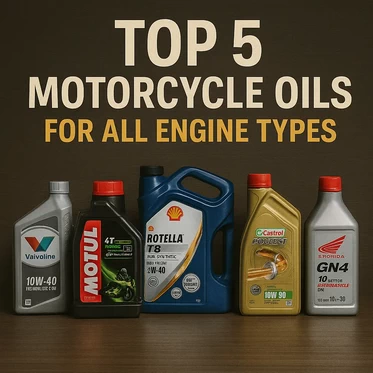
Top 10 Must-Have Motorcycle Accessories for Every Rider
PRICING
The base price for the new BMW S 1000 XR (2025) starts at $17,995. But that's just the starting point. The actual price tag quickly rises depending on the equipment you choose — and this is where the pitfalls lie, but in a good way, as they are worth your money (and temptation) for customisation.
I will list what is included in the package:
- Dynamic ESA Pro — electronically controlled suspension that adapts to the road surface. Makes the ride smoother and adds confidence when cornering.
- Gear Shift Assistant Pro — allows you to shift gears without the clutch. Saves energy in the city and adds speed on the track.
- TPM tyre pressure monitoring — monitors pressure in real time, increasing safety and reducing the risk of unpleasant surprises on the road.
- M carbon wheels — minus the weight and plus incredible handling precision. They significantly improve dynamics, but cost as much as half a scooter.
- M forged wheels — an alternative to carbon: stronger than standard wheels and lighter, making the bike more responsive to the rider's movements.
- M lightweight battery — a few kilograms lighter, plus faster start-up and electronic stability.
- Additional LED headlight — better lighting at night and on country roads. Increases visibility and comfort.
- Luggage rack — a must-have for travelling. Adds practicality, especially if you plan long trips with panniers.
- Heated grips — a lifesaver in cold and rainy weather. A comfortable option that quickly becomes indispensable.
- Lowered suspension — convenient for riders of short stature, makes manoeuvring at low speeds easier.
- Titanium rear silencer M — not only lighter, but also produces a deeper sound, adding to the thrill of riding.
- M GPS-Laptrigger (activation code) — for those who ride on the track. Records lap times and allows you to analyse your results.
- M Carbon package — a complete upgrade in style and weight: wings, covers, carbon bodywork elements. The bike becomes sportier and lighter.
- M blank package — a set of parts for precise customization: from seat adjustments to steering wheel ergonomics.
As a result, it is easy to exceed $25,000, but each option adds either comfort, control, or aesthetics.
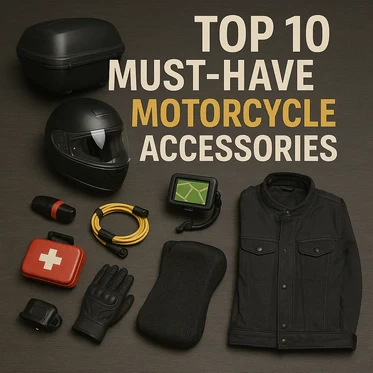
Top 10 Must-Have Motorcycle Accessories for Every Rider
CONCLUSION
Let's compare it with its competitors. The Ducati Multistrada V4 has the same power, but its V4 pulls well in low gears and provides more torque in the city. At the same time, it costs more — both to buy and to maintain. The Kawasaki Versys 1000 seems more relaxed: 120 hp is enough for travelling, but if you like sharpness and excitement, it feels too soft after the BMW. The Yamaha Tracer 9 GT+ with its 119 hp is in a different league — it is lighter, more compact, and designed for manoeuvring in the city, but on the track it lacks wider wheels and suspension balance.
Transmission — this is where BMW shows its class. The Quick Shifter Pro works so well that the gears ‘stick’ to each other, and you don't think about the clutch. Ducati also has a similar solution, but it feels a little sharper. Kawasaki has stuck with the old classic clutch, while Yamaha has a quick shifter, but it's not as sophisticated.
I was pleasantly surprised by the fuel consumption: 5.8 l/100 km in mixed mode. Ducati consumes more — sometimes up to 7. Kawasaki stays around 6.5, and Yamaha is the most economical — 5.2, but the power is also appropriate.
Now about acceleration. The BMW is a real thrill ride: 0–100 km/h in just over 3 seconds, and you can already feel the wind in your helmet. It reaches 200 in less than 9 seconds, and all this with a feeling of complete control. The Ducati is close in speed, but has a smoother start. The Yamaha is noticeably slower, and the Kawasaki even more so.
Design? Everything is subjective here. BMW looks technological and aggressive. Ducati is about prestige and show. Kawasaki is a calm classic, without any frills. Yamaha is something in between: modern, but not so distinctive.
Safety systems are another trump card for BMW. ABS Pro, Dynamic Traction Control, Cornering ABS, six-axis IMU, ESA Pro — everything works seamlessly, saving you in the most difficult moments. Ducati even has adaptive cruise control, Yamaha has its own set, but simpler, and Kawasaki has only basic solutions.
And, of course, there's the price. BMW starts at $17,995, but with options it can easily exceed $25,000. Ducati is even more expensive — up to $28,000. Kawasaki is the most affordable — $14,000, Yamaha is in the middle, at around $15,500.
For me, the conclusion is obvious: Ducati offers prestige, Kawasaki offers value, and Yamaha offers ease. But the BMW S 1000 XR (2025) gives you the feeling that you are on a bike that can be both a sporty predator and a comfortable tourist. This is one of those rare cases where you don't have to choose — you have everything at once.
BMW S 1000 XR 2025 Service FAQ
1. When should the first (zero) maintenance be carried out?
The first maintenance is carried out after a mileage of 1 000 km or at the latest 1 month after purchase (whichever comes first). It includes replacement of motor lubricant and filter, checking of fasteners tightening, adjustment of the drive and updating of electronic systems. This is critical to maintaining BMW Motorrad's warranty.2. What are the intervals between scheduled maintenance?
BMW recommends service every 10,000 km or once every 12 months. The works include replacement of lubricant and filters, inspection of the braking system, circuit adjustment, electronics diagnostics and software updates. Some elements (brake fluid, spark plugs) have longer regulated intervals.3. What motor lubricant is recommended by the manufacturer?
BMW Motorrad advises using Advantec Ultimate 5W-40 lubricant (synthetic, API SL/JASO MA2). It is designed specifically for high-pressure 4-cylinder BMW engines, withstands high temperatures and guarantees stable operation of the clutch system. The use of other lubricants may affect the warranty.4. How often should the chain be maintained and adjusted?
Lubrication is recommended every 500–800 km or after a trip in the rain or dirt. Tension must be checked at least once every 1 000 km: free movement must be within the limits specified in the service book (approximately 35–45 mm). Proper maintenance of the circuit extends its life and ensures smooth power transmission.5. How often do I need to update my motorcycle software?
Software updates are recommended to be performed during each scheduled maintenance at a certified BMW dealer. It cannot be done independently, because the update requires diagnostic equipment. Regular updates ensure the correct operation of ABS Pro, DTC and Dynamic ESA systems.6. When should brake fluid be changed and how often should pads be checked?
BMW instructs you to change your brake fluid every 2 years, regardless of mileage. Pads should be checked at each maintenance station and visually monitored before trips. If the thickness of the friction layer is less than 2 mm —, the pads must be replaced.7. What tire pressure is recommended?
For driving alone, BMW recommends 2.5 bar (front) and 2.9 bar (rear). When driving with a passenger or with luggage, the rear pressure should be increased to 3.0 bar. These indicators ensure optimal grip and tire life.8. What can I do on my own without losing my warranty?
The user can independently check the tire pressure, lubricate and clean the circuit, control the oil level, wash the motorcycle and charge the battery with standard means. Interference with electronics or power plant is only allowed at the BMW Motorrad service center.
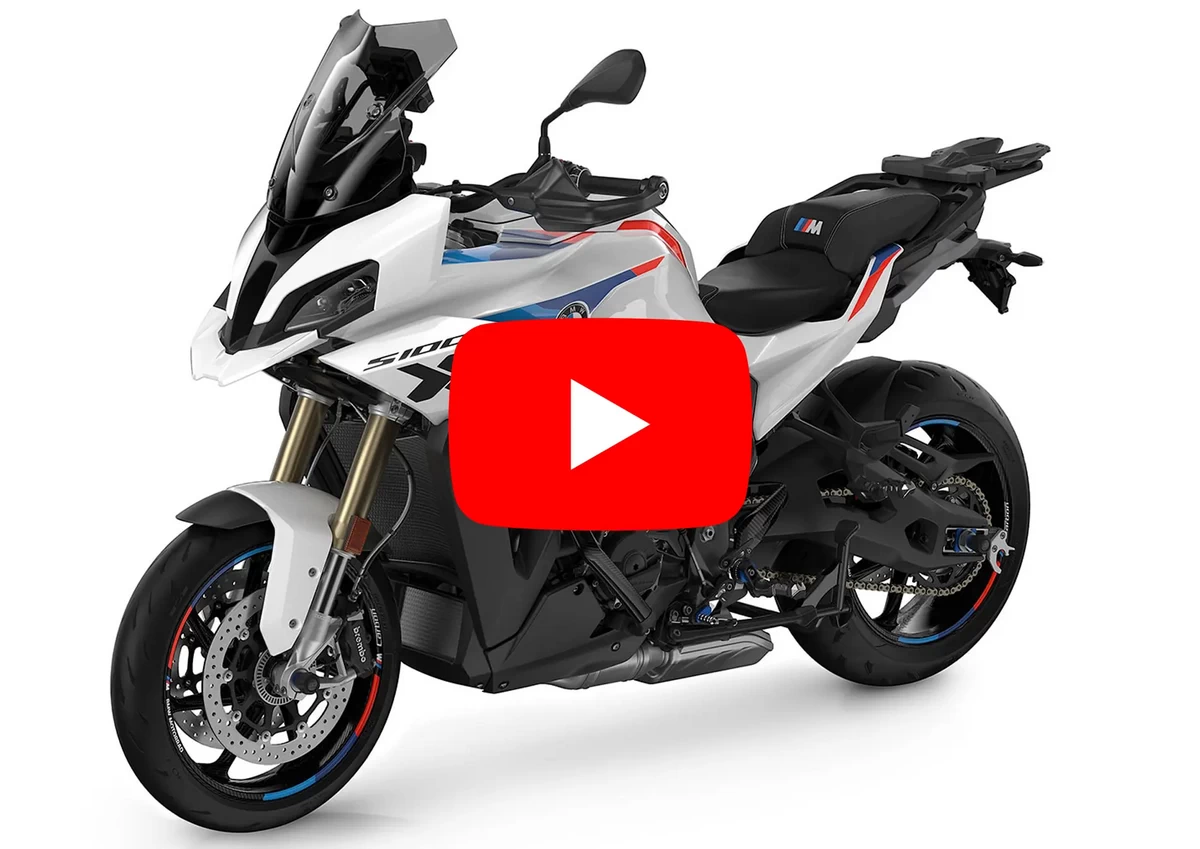
BMW S 1000 XR Video Review


JoomShopping Download & Support